
Lesson 12 of 15 Part 3: How the story got told
Words matter
Saying “Katrina destroyed New Orleans” is like saying traffic destroyed the Minneapolis bridge. How a phrase, a press release, a PR budget and a squadron of anonymous commenters shaped what America believes — and how Levees.org pushed back.
Language does work. The words we use to describe a disaster decide who we hold responsible for it.
Katrina shorthand
Saying “Katrina flooded New Orleans” is confusing to the American public. The tendency of media and politicians to call the New Orleans flooding a natural disaster strips the human agency out of what happened and protects those who made mistakes. In the case of the levee failures, that is quite useful for the Army Corps of Engineers, the entity responsible.
To say Katrina wiped out New Orleans is like saying traffic wiped out the Minneapolis bridge. Both Katrina and the traffic revealed structural flaws. Both exposed blatant civil engineering mistakes.— Sandy Rosenthal, 2009
Levees.org calls it Katrina shorthand. It is lazy, and for the people who lived through the evacuation, the loss and the relocation, it is cruel. Four days after a federal judge found that the Army Corps’ actions “resulted in a catastrophic loss of human life and property in unprecedented proportions,” a New York Times article still said Katrina “wrought sudden devastation” to the region.
Dr. Steve Gorelick, a professor of media studies at Hunter College, recalled the lesson of his own teacher, the sociologist Gaye Tuchman:
Always be aware, she implored us, to look behind language that would seem to attribute social change or calamity to unpreventable weather or randomness. This narrative and this vocabulary, she warned, denied human agency. It minimized the individuals and institutions whose actions could often be found hiding behind all the talk of water and wind. — Steve Gorelick, 2010
Journalist John McQuaid made the same point about the Fukushima nuclear disaster, which a parliamentary inquiry in Japan called “man-made”: blaming nature “is quite convenient for those who screwed up, because the basic notion of a ‘natural disaster’ is something beyond anyone’s control.”
Fighting back, one story at a time
In 2007, Levees.org launched a letter-writing team to contact and educate editors whenever their reporters published incorrect information. The team, endorsed by actor and producer Harry Shearer, operates nationwide. Levees.org also awards Seals of Approval to reporters who properly describe the flooding as due to levee failure. The New York Times wrote about the campaign in 2010.
In 2009, the New Orleans City Council unanimously passed a resolution, written by Levees.org, urging all local media to stop using Katrina shorthand. The New York Times issued a correction to a reporter’s description of the flooding that year; the Associated Press issued corrections in 2012. And in 2010, Gambit’s Clancy DuBos made good on a promise to Sandy Rosenthal: his magazine’s writers would henceforth call the flooding “the federal flood.”
The press release
On June 1, 2007, the American Society of Civil Engineers (ASCE) released its External Review Panel’s report. The report itself gave a fair analysis. The accompanying press release did not. It suggested there would still have been widespread death and destruction even if the levees and floodwalls hadn’t failed.
It was misleading. I don’t know if it was done intentionally or through ignorance, but it misled people … and many people found it all too easy to believe that the corps and the ASCE were in cahoots. — Tom Jackson, former ASCE president and member of the External Review Panel
Records Levees.org obtained under the Freedom of Information Act showed that the Army Corps had directed the ASCE as early as October 2005 and later paid the group more than $1.1 million for its peer review and for PowerPoint seminars presented at colleges and conferences nationwide and abroad. In dozens of those presentations, ASCE spokespersons stated that the New Orleans levee board wanted to “cut cost at each step of the way.”
Levees.org created a website, the “American Society for Civilizing Engineers,” with a sign-on letter asking the ASCE to retract the release. Signers included Robert Bea, Ivor van Heerden and H.J. Bosworth Jr. With students at Isidore Newman School, Levees.org also made a satirical video, Levee Spin 101, about the cozy relationship between the Corps and the ASCE. The ASCE’s lawyer sent a cease-and-desist letter threatening to sue.
Levees.org didn’t back down. With pro bono counsel from Cooley LLP and Adams and Reese, it reposted the video at a press conference on December 14, 2007. “The American Society of Civil Engineers shall not bully, shall not intimidate a little grassroots group and a bunch of high school kids out of exercising our First Amendment rights,” Rosenthal said.
After a 13-month investigation, the ASCE’s own Committee on Professional Conduct found that the news release had incorrectly “repeated estimates of deaths and property damage that might have occurred in New Orleans if levees and floodwalls hadn’t been breached.” The campaign was successful.
The online attack campaign
When Levees.org launched in 2005, Sandy Rosenthal, her son and her supporters were immediately hammered with ugly comments online from dozens of different critics with a consistent message: Rosenthal is a liar. New Orleans was flooded due to a monster storm and lazy local officials.
Shame on Sandy for using her kid for a cheap publicity stunt. Obviously her group has NO EVIDENCE WHATSOEVER… — Anonymous commenter on nola.com, December 2008
In December 2008, using backend tools available to any amateur blogger, Rosenthal discovered that the comments were coming from Army Corps computers at the New Orleans District headquarters on Leake Avenue. The commander called it the work of “one individual among 1600 people” and sent a memo telling his staff to “stop that.” But the managing editor of nola.com and his assistant later reviewed a spreadsheet of nearly 700 disparaging comments from Corps headquarters in a six-week period alone, from about 20 regular posters.
In 2009, at Levees.org’s request, U.S. Senator Mary Landrieu asked the Pentagon to investigate. After six weeks, the Department of Defense concluded that the commander “took appropriate actions once informed.”
In 2008, the techniques now called “astroturfing” and “trolling” were not well known. Levees.org was one of the first victims of a squadron of foot soldiers waging warfare on social media against a grassroots group. It is remarkable that Levees.org prevailed.
The PR contract
After the levees broke, the Army Corps’ New Orleans District quietly hired a public relations firm called Outreach Process Partners. Under a three-year contract worth nearly $5 million, the firm boasted that it reduced negative news stories about the Corps. When Levees.org told its supporters in May 2009, CBS News and the Associated Press reported it nationally.
In 2016, Levees.org obtained video of a Corps public affairs officer standing beside the 17th Street Canal saying, “The surge was just too great for the system. So, the system didn’t fail, it got over-ran.” Every study — including the Corps’ own IPET — says the canal walls did fail.
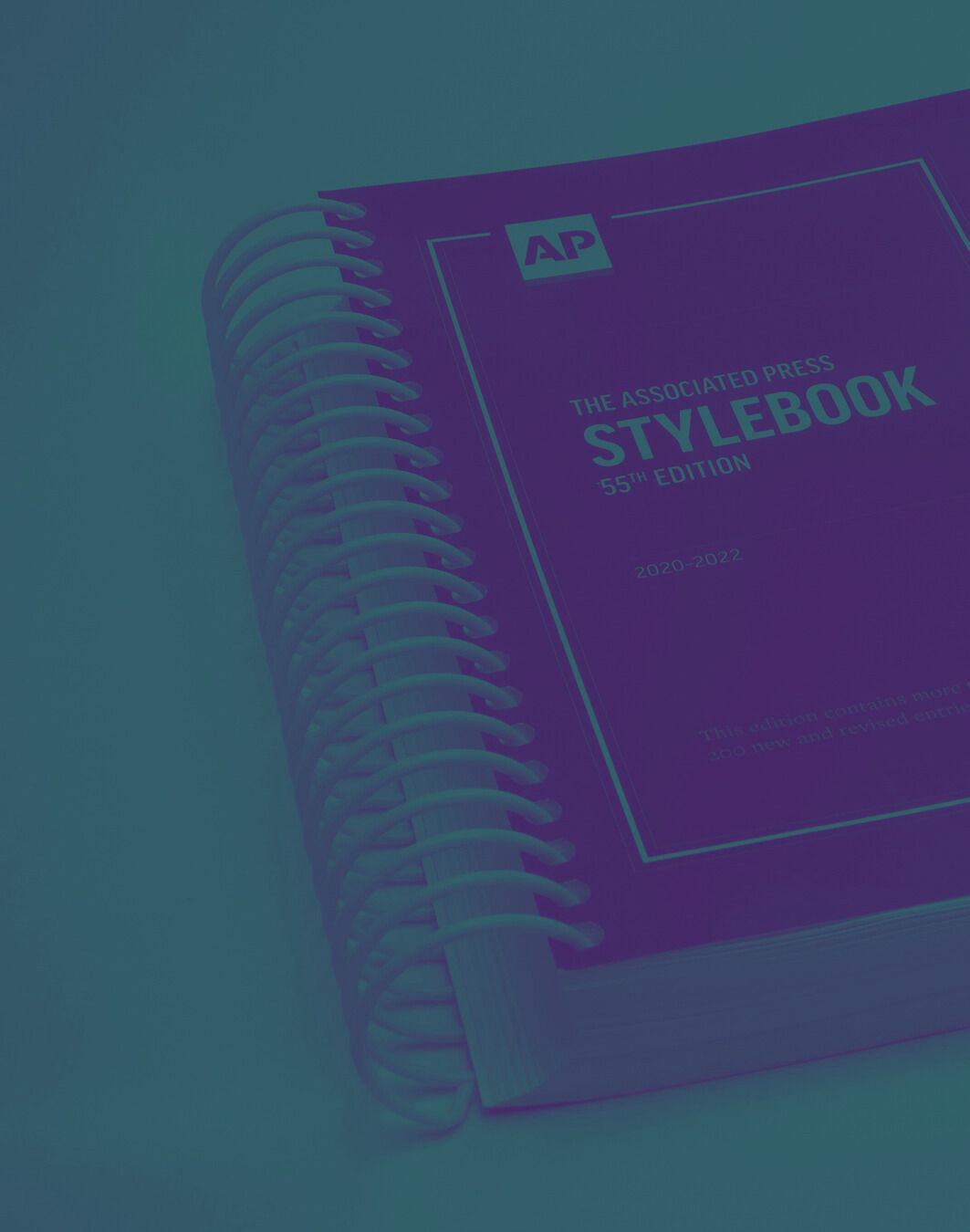
The Associated Press changes its style guide
On August 10, 2011, the Associated Press issued a style guide for reporters writing about the tenth anniversary of September 11, 2001. But on the tenth anniversary of the levee breaches, it issued no such guidance on the most costly hurricane in U.S. history. In March 2022, Levees.org started a conversation with the AP about changing that.
The conversation was successful. On September 27, 2022, the AP issued new guidance on Hurricane Katrina for its reporters around the world. Among its passages:
When writing about the devastation caused by Hurricane Katrina, it is important to note that levee failures played a major role in the devastation in New Orleans. In some stories, that can be as simple as including a phrase about Hurricane Katrina’s catastrophic levee failures and flooding. Some stories may require more detail.
Some basics: In New Orleans, flaws in the design and construction of the federally built levee system led to multiple levee breaches and catastrophic flooding… — Associated Press, 2022
As a retired newspaper reporter I know how important the AP Style Guide is and how difficult it is to get a style guide changed. This is huge and long overdue. — Kate, a Levees.org supporter
How to say it Instead of “Katrina flooded New Orleans,” say “the levees failed during Hurricane Katrina and flooded New Orleans.” Instead of “the Katrina disaster,” say “the 2005 levee breaches” or “the federal flood.” Instead of “a natural disaster,” say “the worst civil engineering disaster in U.S. history.”
Words got the story wrong, and words are slowly setting it right. In the final part of this course, we turn to what the levee failures changed — and why that matters to every American who lives behind a levee.
Go deeper
Sources
- Associated Press, Hurricane Katrina style guidance, September 27, 2022
- New York Times story on Levees.org's Seal of Approval campaign, April 26, 2010
- John McQuaid, Forbes, July 2012