
Lesson 15 of 15 Part 4: Why it matters to you
Remembering and learning
History, both the good and the bad, shall be recorded. How Levees.org marks the breach sites — and why it wants every engineering student in America to learn what happened here.
Early in the morning of August 29, 2005, levees and canal walls in and around the City of New Orleans failed far below their design capacity. It was not a shining moment for American civil engineering. It is nonetheless a historic event — one that changed national policy and the lives of millions.
Levees.org believes that history, both the good and the bad, shall be recorded.
Historic plaques at the breach sites
On August 23, 2010, Levees.org unveiled its first Louisiana State Historic Plaque, on city property at ground zero of the 17th Street Canal breach. Created for both visitors and residents, the plaques are adorned with the brown pelican, the state bird, and explain why the flood protection failed and what happened as a result. Each was vetted and fact-checked by the Louisiana State Office of Historic Preservation.
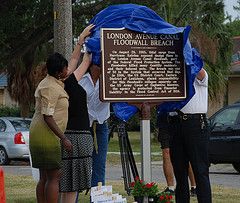
On Friday, May 20, 2011, Levees.org and Grammy Award-winner Irvin Mayfield Jr. hosted an unveiling ceremony for the second plaque near ground zero of the London Avenue Canal breach. More than 100 residents attended. Mayfield played the first song he ever learned, “A Closer Walk with Thee,” and dedicated it to the memory of his father, Irvin Mayfield Sr., and all the victims of the flooding. The event closed with the release of two doves by Big Chief Clarence Dalcour of the Tribe Creole Osceola.
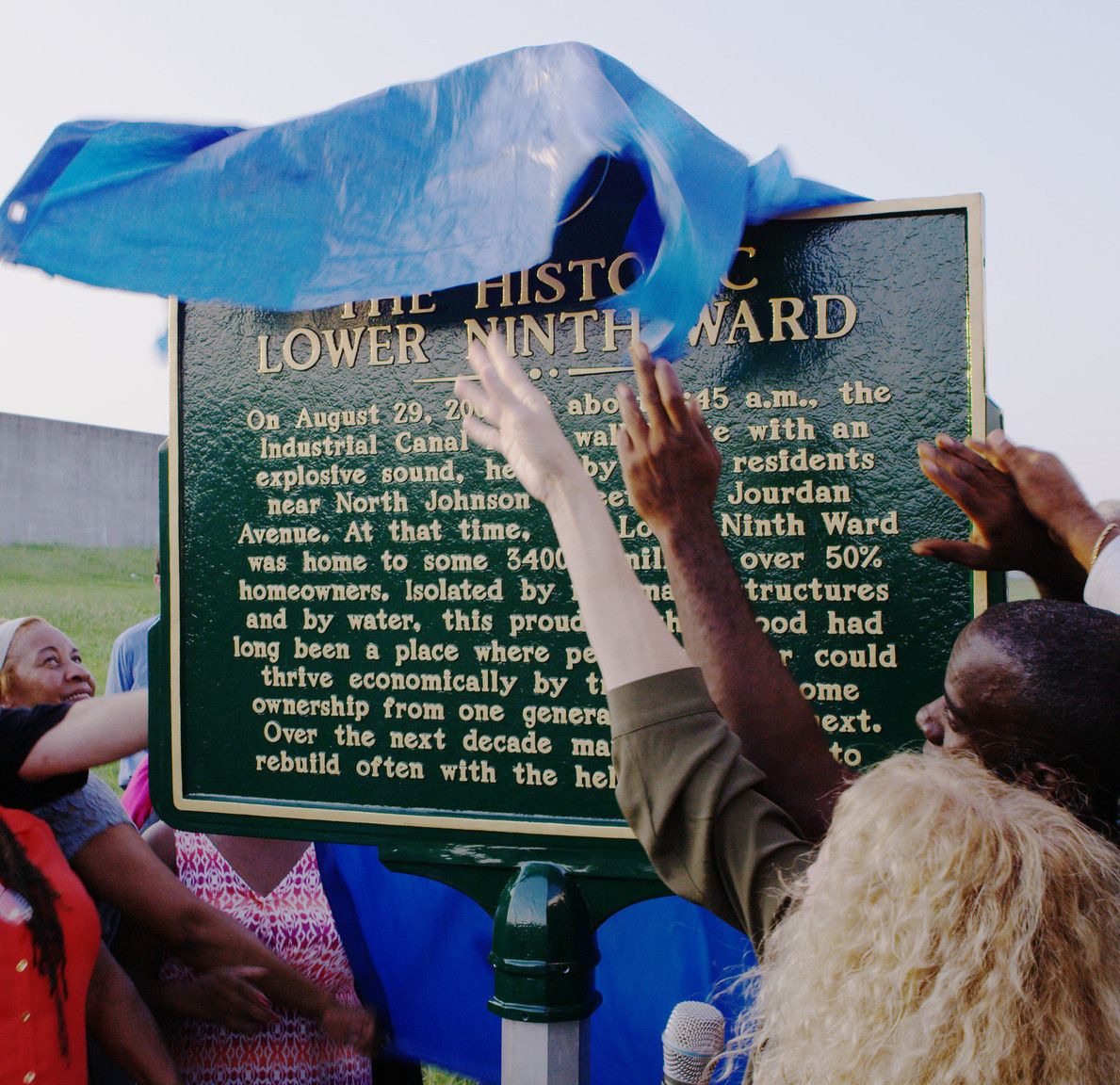
On August 24, 2015, Levees.org unveiled a third plaque at the Industrial Canal breach site in the Lower Ninth Ward, with the guidance and input of the neighborhood’s stakeholder leaders.
Each plaque is the embodiment of a neighborhood initiative. Community leaders approached Levees.org for help, and the text and locations were chosen with neighborhood association leaders and affected residents. Levees.org supporters paid for them — $1,740 each.
The National Register of Historic Places
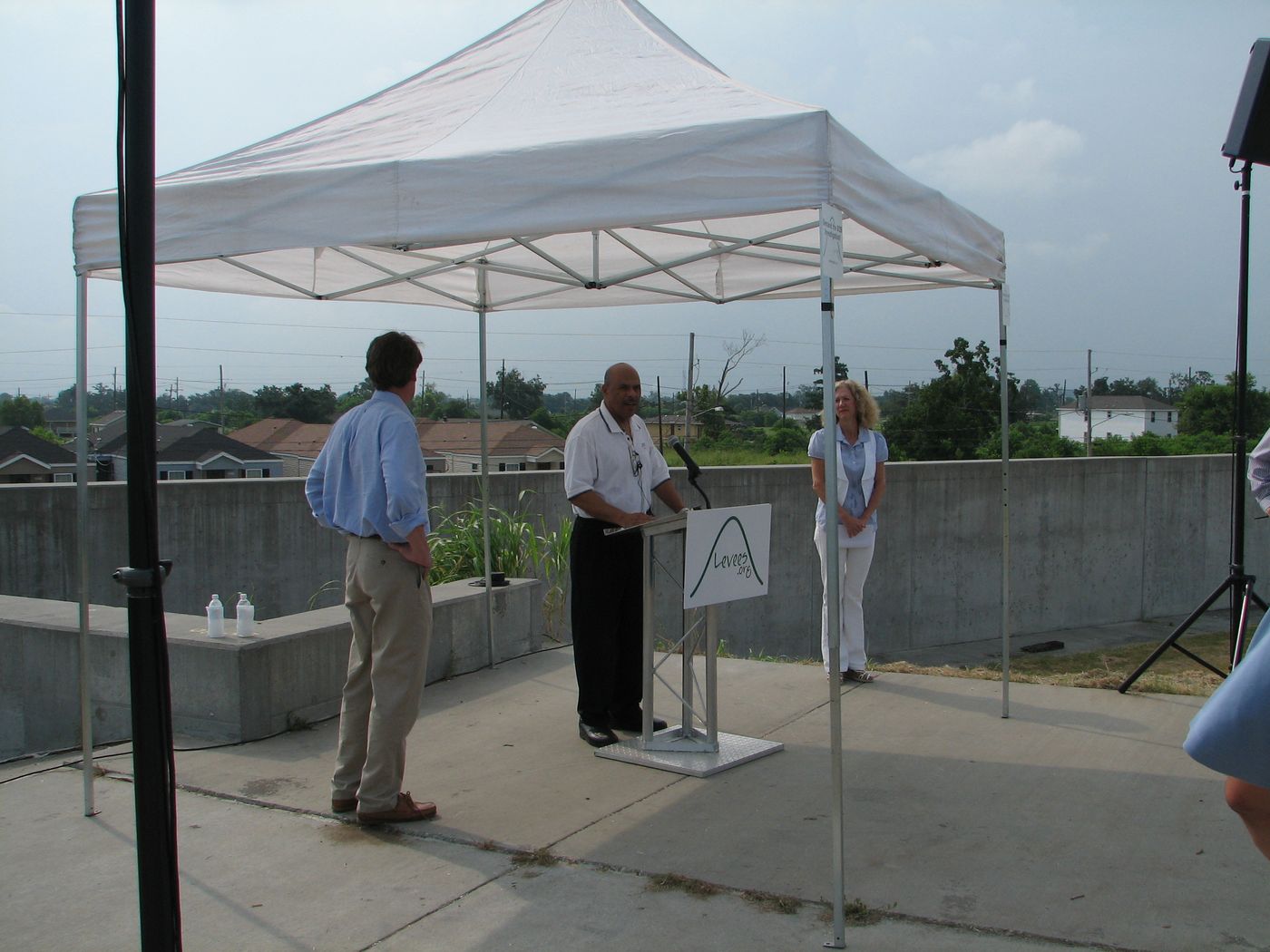
In August 2010, with the Lower Ninth Ward as a backdrop, Levees.org announced its nomination of two levee breach sites to the National Register of Historic Places: the 17th Street Canal and the north breach on the east side of the Industrial Canal.
Why list a failure? Because the breaches prompted nearly a dozen changes to national policy and practice, including the first-ever nationwide levee safety program and national levee database. A listing also helps federal agencies in the future: identified National Register properties must be considered in environmental reviews, which can make those reviews faster and save public funds.
In February 2011, Levees.org hired Mark Barnes, a retired federal expert with 35 years of experience and more than 1,000 nominations, to guide the effort. In April 2011, the State Office of Historic Preservation confirmed that Levees.org’s 28-page documentation of the two breaches had been placed in a public file that federal agencies must consult when undertaking any project near the breach sites. The two sites are now National Register Eligible Properties.
The Army Corps objected, and spent considerable taxpayer funds doing so. Levees.org appealed to the National Park Service. The quest continues. As Levees.org wrote at the eighth anniversary: “Even if it takes years, Levees.org will continue to work hard to place the breach site on the National Register of Historic Places.”
A museum and an exhibit hall
Levees.org has a substantial physical presence at the south breach of the London Avenue Canal, on Warrington Drive in the Gentilly neighborhood. Both are free and open to everyone, 365 days a year, sun-up to sundown.
The Levee Exhibit Hall & Rain Garden opened in August 2015, built in partnership with the residents of the Filmore Gardens neighborhood. Six museum-quality exhibit panels, with text and forty photographs, line a 100-foot covered walkway and tell the full and vetted story of every major breach. It is a memorial to the trauma of the levee breaches, a commemoration of a turning point in American history, and a symbol of residents’ determination to return home. The rain garden’s native plants need no fertilizer or insecticides and reduce the load on the city’s drainage system.
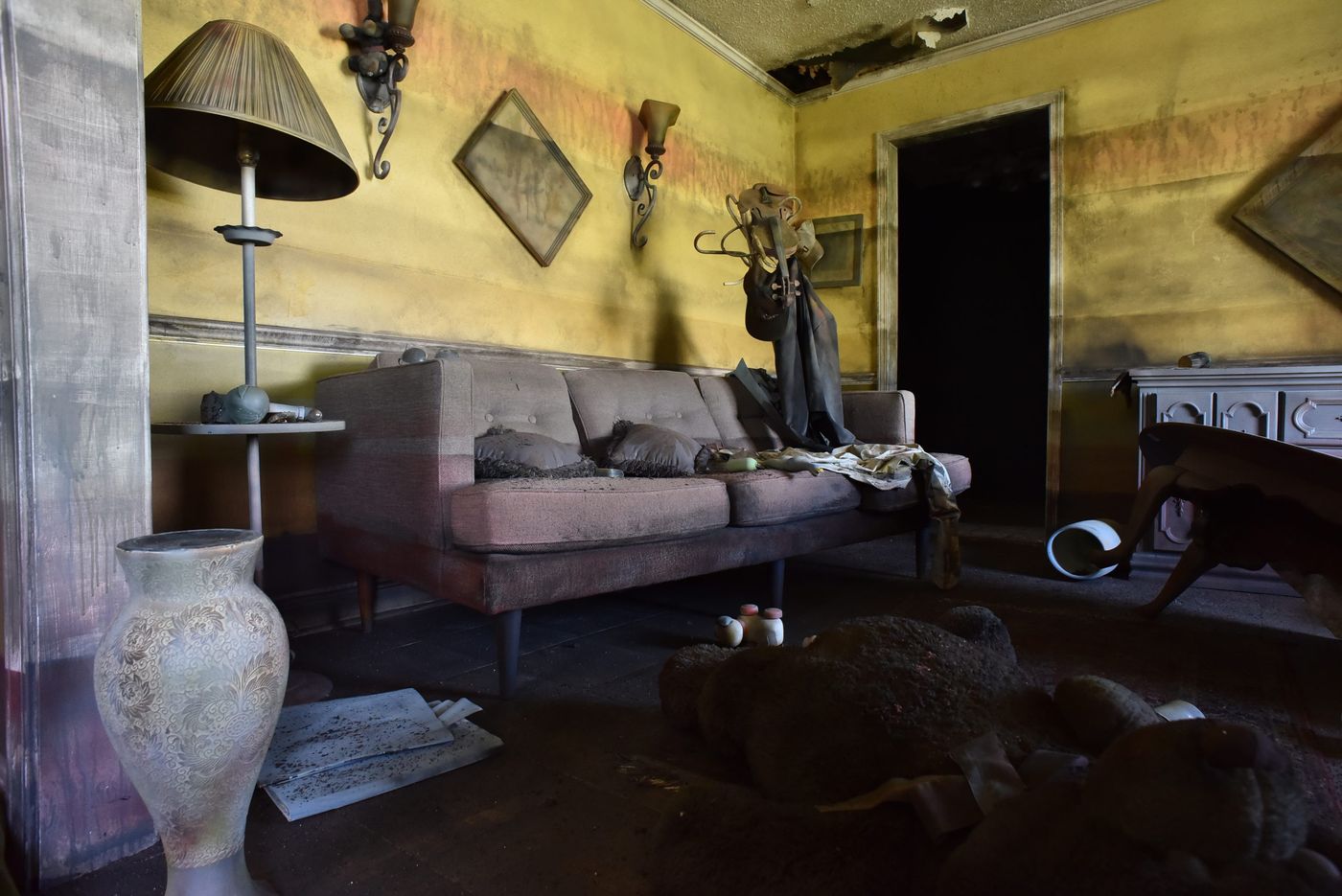
The Flooded House Museum, next door, is one of a kind. In 2016, Levees.org purchased a gutted house steps from the breach. With volunteers in history, art, civil engineering, construction and photography, it built a life-sized diorama, visible through the front windows, of what homes in the neighborhood looked like when homeowners returned from their flood-imposed exile. The ribbon cutting was March 23, 2019.
Plan a trip on the Visit page, which also includes a self-guided bike tour of the breach sites.
Engineering Failures Education
In 2022, it came to Levees.org’s attention that civil engineering students were not being taught about the worst civil engineering disaster in U.S. history. Students were graduating without knowing that engineering mistakes led to the collapse of the Army Corps’ levees in New Orleans.
There is no acknowledgment from academic institutions that they are responsible for instruction of “professional practice” issues, such as the applicable “standard of care” engineers can expect to be held to once they graduate and begin their practice. — J. David Rogers
At the 18th anniversary of the levee failures, at the London Avenue Canal breach, Levees.org launched Engineering Failures Education (EFE): a public safety campaign to require all students working toward a bachelor’s degree in engineering in the U.S. to receive instruction on engineering failures and the lessons learned from them. The engineering students of today will develop the technological solutions of tomorrow.
The plan: a coalition of deans of the nation’s 200+ ABET-accredited engineering schools will write to the president of ABET, the accrediting body, recommending a change to an existing requirement. Student Outcome 4 currently asks for “an ability to recognize ethical and professional responsibilities in engineering situations and make informed judgments…” The campaign asks that it add: “and must demonstrate awareness of past engineering failures.”
The letter will carry three appendices: engineers and experts nationwide in support, organizations in support, and citizens-at-large who have signed the online manifesto. The Associated Press covered the campaign coast to coast.
“We need to create a world where, if engineering schools do not provide instruction on engineering failures then the schools won’t be accredited,” said Sandy Rosenthal.
No one blames the iceberg
On April 15, 1912, more than fifteen hundred souls were lost when the Titanic sank, due primarily to human arrogance. The captain was trying to complete the maiden voyage in record time despite iceberg warnings, and there were too few lifeboats. More than a century later, we still talk about the disaster that changed maritime law. No longer may ships turn off their radios. No longer do speed records matter more than lives.
The Titanic sank and no one blames the iceberg. Hopefully, one hundred and ten years from the Levee Breach Event of New Orleans in 2005, no one will blame the hurricane.— Levees.org, 2022
That is the purpose of this site, and of every plaque, exhibit, lawsuit, letter and lesson Levees.org has produced since December 2005. The survivors deserve for everyone, everywhere to know the truth.
You’ve finished the course. Test what you’ve learned, keep the myth busters handy, and share this site with someone who still thinks Katrina flooded New Orleans.
Go deeper
- Historic Plaques at Breach Sites
- Levees.org's nomination of Levee Breach Sites to National Register of Historic Places
- Engineering Failures Education; A Public Safety Campaign
- How the Titanic disaster is similar to the Levee Breach catastrophe
- The Challenger: Are the Army Corps' levee failures a similar story?
Sources
- ABET Engineering Accreditation Criteria, Student Outcome 4
- Louisiana State Office of Historic Preservation